When sourcing structural materials for outdoor poles, canopy frames, and outdoor support structures, buyers and manufacturers often face a critical choice:aluminum tube or steel tube. Both materials have been widely used in outdoor construction, camping equipment, and commercial canopy projects, but their differences in weight, durability, cost, and maintenance make them suitable for entirely different application scenarios. Understanding the core advantages and limitations of aluminum tubing and steel tubing is essential for businesses, contractors, and individual users who want to select cost-effective and long-lasting outdoor pole solutions.
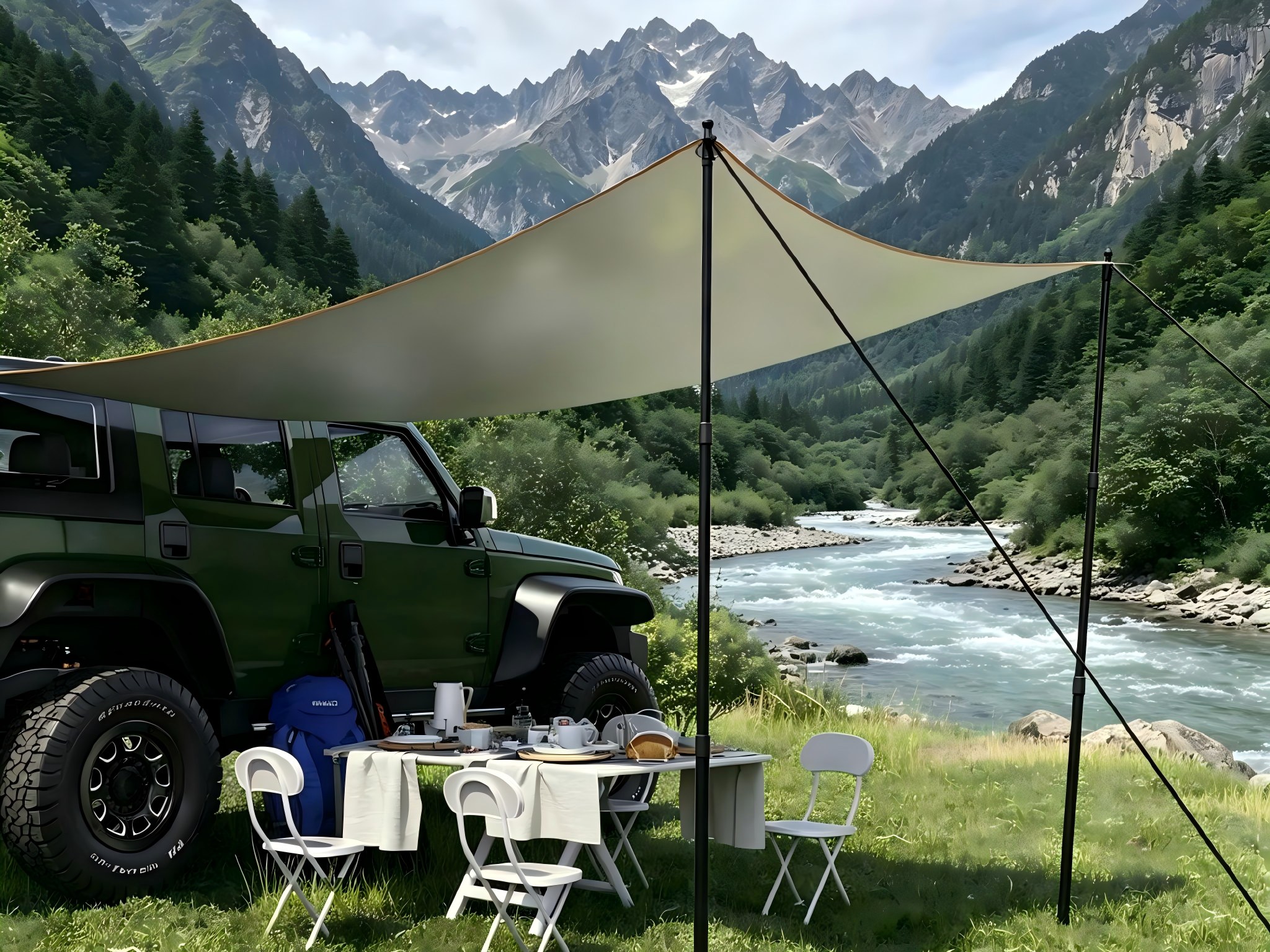
First and foremost, weight performance is the most intuitive gap between aluminum tube and steel tube. Aluminum alloy materials feature an extremely low density, making aluminum poles far lighter than steel poles of the same specification. For outdoor activities such as camping, hiking, and self-driving tours, lightweight equipment is a core demand for users. A standard aluminum canopy pole weighs nearly 60% less than a steel pole with the same wall thickness and diameter. This lightweight advantage greatly reduces transportation and carrying pressure, allowing users to assemble and disassemble canopy frames independently without heavy tools. In contrast, steel tubes are heavy and bulky, which is not conducive to portable outdoor equipment and will greatly increase labor costs during installation and handling for large-scale commercial projects.
Corrosion resistance is another key factor that determines the service life of outdoor poles. Outdoor environments are exposed to wind, rain, ultraviolet rays, and humid air for a long time, and metal structures are prone to oxidation and rust. Steel tubes without professional anti-rust treatment will quickly rust in humid or rainy weather, leading to surface peeling, structural thinning, and reduced bearing capacity. Regular rust removal and paint maintenance are required, which increases long-term use costs. On the contrary, aluminum tube has natural oxidation resistance. A dense oxide film will automatically form on the surface of aluminum alloy, isolating air and moisture to prevent corrosion. After secondary treatments such as anodizing and powder spraying, the anti-corrosion performance of aluminum tubing is further improved, enabling it to maintain a stable appearance and structural performance in coastal, rainy, and high-humidity outdoor environments for many years without frequent maintenance.
In terms of structural strength and load-bearing performance, many users mistakenly believe that steel poles are completely superior to aluminum poles. In fact, high-quality aluminum alloy tubes represented by 6063 and 6061 alloys have excellent tensile strength and toughness. Through precise extrusion process optimization, aluminum canopy pole products can achieve high hardness and bending resistance while maintaining light weight. For conventional outdoor canopy support, camping tent fixing, and garden awning frames, the load-bearing capacity of thick-walled aluminum tubes fully meets the demand. Steel tubes have higher ultimate strength and are suitable for super-heavy load industrial support, but they have obvious disadvantages such as easy deformation and difficult recovery after bending. Aluminum alloy poles have good toughness, which can buffer external impact force such as strong wind, effectively avoiding permanent structural deformation of the canopy frame.
Cost and processing flexibility also make aluminum tube more competitive in the outdoor pole market. Steel tube processing is relatively single, with poor plasticity, and it is difficult to realize complex bending, cutting, and shaping. Aluminum tubing has strong ductility and machinability, supporting customized cutting, drilling, bending, and telescopic structure production. Most of the retractable and portable aluminum canopy poles on the market rely on the excellent processing performance of aluminum alloy. In terms of comprehensive cost, although the unit price of aluminum raw materials is slightly higher than steel, the lightweight advantage reduces transportation costs, and the corrosion resistance reduces later maintenance costs. The overall comprehensive use cost of aluminum poles is far lower than steel poles in long-term outdoor application scenarios.
In conclusion, steel tubes are only suitable for fixed industrial heavy-load support scenarios that do not require movement and pursue ultra-high strength. For almost all outdoor pole application scenarios including camping canopies, garden awnings, commercial event tents, and portable outdoor support frames, aluminum tube and aluminum poles are the better choice. With light weight, strong corrosion resistance, flexible processing, and low maintenance cost, high-quality aluminum canopy pole products have become the mainstream material for modern outdoor structural equipment.