In the rapidly evolving global automotive and industrial robotics industries, material selection stands as the core foundation of product performance, durability, and cost-efficiency. As lightweight, high-strength, and customizable industrial materials, aluminum profiles have gradually replaced traditional steel, iron, and plastic materials and become the mainstream choice for high-precision automotive parts and robotic system components. For B2B buyers, including automotive manufacturers, robotics system integrators, and industrial equipment enterprises worldwide, choosing aluminum profile components means optimizing product quality, reducing long-term operational costs, and enhancing market competitiveness. This article comprehensively analyzes the inherent advantages of aluminum profiles and their irreplaceable value in automotive and robotic accessory manufacturing, explaining why global industrial enterprises prioritize aluminum profile solutions.
1. Ultra-Lightweight Property: Core Advantage for Energy Saving & Operational Efficiency
Weight reduction is an eternal pursuit in modern automotive manufacturing and industrial robotics design, and it is also the primary reason why aluminum profiles are widely adopted in high-end industrial accessories. Aluminum alloy materials boast a low density of only 2.7g/cm³, which is nearly 35% lighter than carbon steel and 60% lighter than stainless steel. This outstanding lightweight characteristic brings revolutionary improvements to automotive and robotic equipment.
In the automotive industry, lightweight aluminum profile parts (including automotive body frames, chassis brackets, door structural parts, and new energy battery trays) can effectively reduce the overall weight of vehicles. For traditional fuel vehicles, every 100kg reduction in vehicle weight can reduce fuel consumption by 6%-8% and cut exhaust emissions significantly, helping automakers meet global increasingly stringent environmental emission standards. For new energy electric vehicles, lightweight aluminum profile structures directly solve the core pain points of short battery life and heavy vehicle weight. Lighter vehicle bodies improve battery endurance, accelerate charging efficiency, and enhance driving stability, becoming a key factor in upgrading new energy vehicle performance.
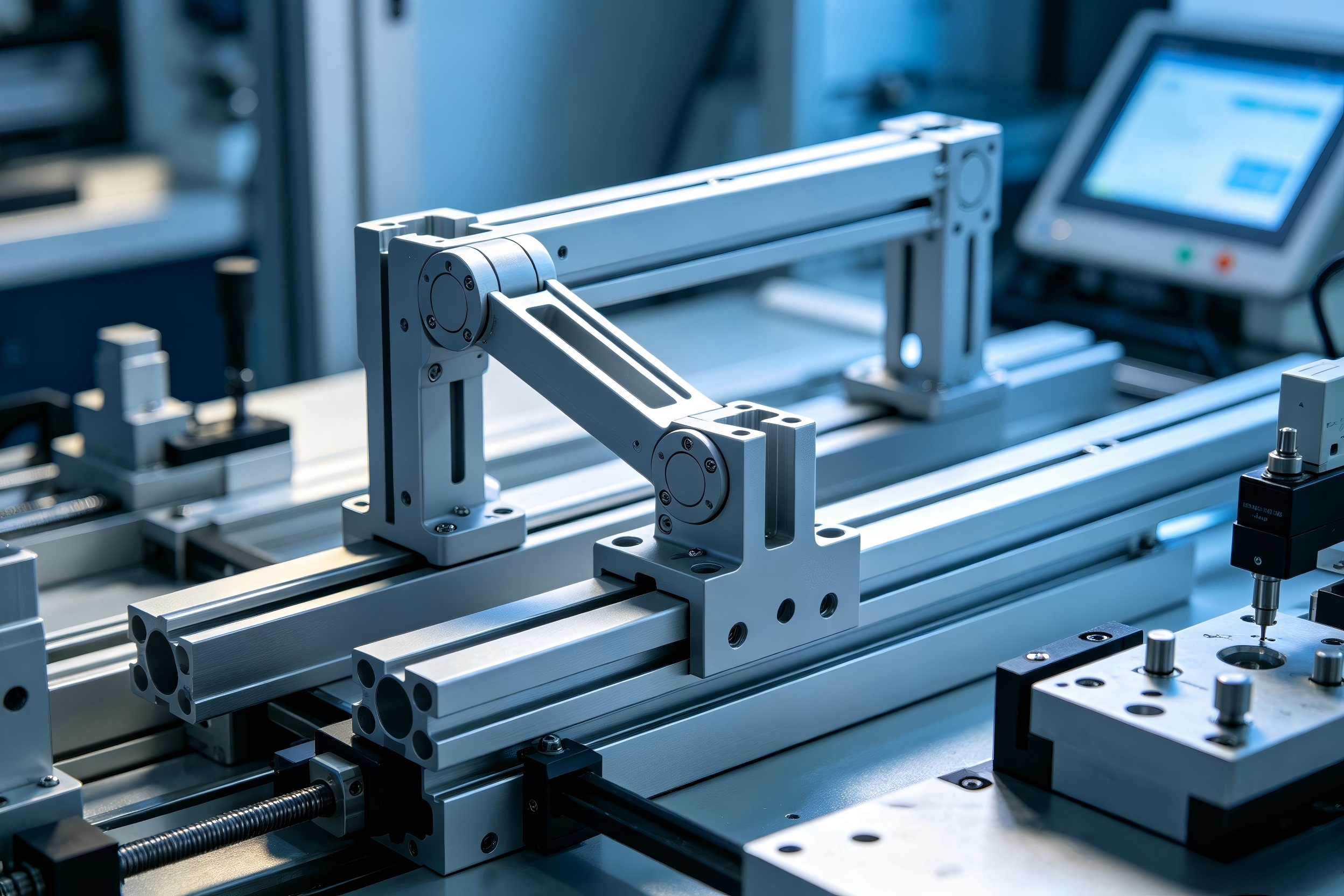
In industrial robotics, lightweight aluminum profile accessories such as robot arms, fixed brackets, mobile bases, and linear motion modules greatly reduce the self-weight of robotic equipment. Lighter robotic structures lower the load pressure of drive motors and transmission systems, enabling robots to achieve faster response speeds, higher operating accuracy, and more flexible movement trajectories. Meanwhile, the reduced equipment inertia effectively lowers energy consumption during long-term continuous operation, greatly improving the overall operational efficiency and service life of automated production lines. For factory automated production scenarios with 24-hour uninterrupted operation, the energy-saving benefits of aluminum profile equipment can bring substantial long-term cost savings for enterprises.
2. High Specific Strength & Structural Stability: Meet Industrial High-Precision Requirements
Many buyers mistakenly believe that lightweight materials mean insufficient strength, but aluminum profiles perfectly balance light weight and high mechanical strength. Through precise alloy ratio optimization and heat treatment processes such as anodizing and hardening, industrial aluminum profiles have excellent specific strength (strength-to-weight ratio), far exceeding many traditional metal materials. High-grade industrial aluminum profiles commonly used in automobiles and robots, such as 6061, 6063, and 7075 series, feature high tensile strength, strong compression resistance, and outstanding torsion resistance, fully adapting to high-load, high-frequency, and high-precision industrial working conditions.
Automotive parts need to withstand complex road vibration, impact pressure, and long-term alternating loads. Aluminum profile structural parts can maintain stable mechanical performance under extreme working conditions such as high-speed driving, bumpy roads, and temperature changes, effectively improving vehicle safety and structural durability. In particular, the integrated aluminum profile body structure has better impact energy absorption capacity, which can buffer impact force in collision accidents and protect passenger safety to the greatest extent.
Industrial robots have extremely strict requirements on component stability and precision. Robotic arms, fixture supports, and equipment frames made of aluminum profiles will not deform or shift after long-term high-frequency operation. The precise dimensional tolerance of customized aluminum profiles can fully meet the micron-level assembly accuracy requirements of robotic systems, ensuring the repeated positioning accuracy and operational stability of automated equipment. Different from plastic parts that are prone to aging and deformation and ordinary steel parts that are heavy and easy to rust, aluminum profiles maintain stable structural performance in long-term industrial use, reducing equipment failure rates and maintenance frequency.
3. Excellent Corrosion Resistance & Weather Resistance: Reduce Long-Term Maintenance Costs
Automotive and robotic equipment often operates in complex and harsh environments, including outdoor high and low temperatures, humid and rainy weather, industrial dust, and chemical gas erosion. Material corrosion and aging are key factors affecting the service life of accessories and equipment. Aluminum profiles have natural excellent corrosion resistance: a dense and stable oxide film will be automatically formed on the surface of aluminum alloy, which can isolate air and moisture and prevent oxidation and rust.
After secondary surface treatment processes such as anodizing, powder coating, electrophoretic coating, and sandblasting, the corrosion resistance, wear resistance, and weather resistance of aluminum profiles are further greatly improved. The treated aluminum profile parts can resist ultraviolet radiation, high-temperature oxidation, acid and alkali corrosion, and salt spray erosion, and can maintain a complete appearance and stable performance in harsh environments such as outdoor driving, factory high-temperature workshops, and humid industrial bases.
For B2B enterprises, this advantage means extremely low later maintenance costs. Unlike steel parts that require regular rust removal, painting, and anti-corrosion maintenance, aluminum profile automotive and robotic accessories almost do not need daily anti-corrosion maintenance. Their long service life effectively reduces the replacement frequency of spare parts, cuts the overall operating cost of equipment and vehicles, and brings higher return on investment for buyers.
4. Strong Customization & Easy Processing: Adapt to Diverse Industrial Design Needs
Modern automotive design and robotic equipment manufacturing are developing towards diversification, precision, and personalized customization, which puts forward higher requirements for the plasticity and processability of materials. Aluminum profiles have outstanding processing advantages that cannot be matched by other metal materials, and are very suitable for customized production of various complex automotive and robotic accessories.
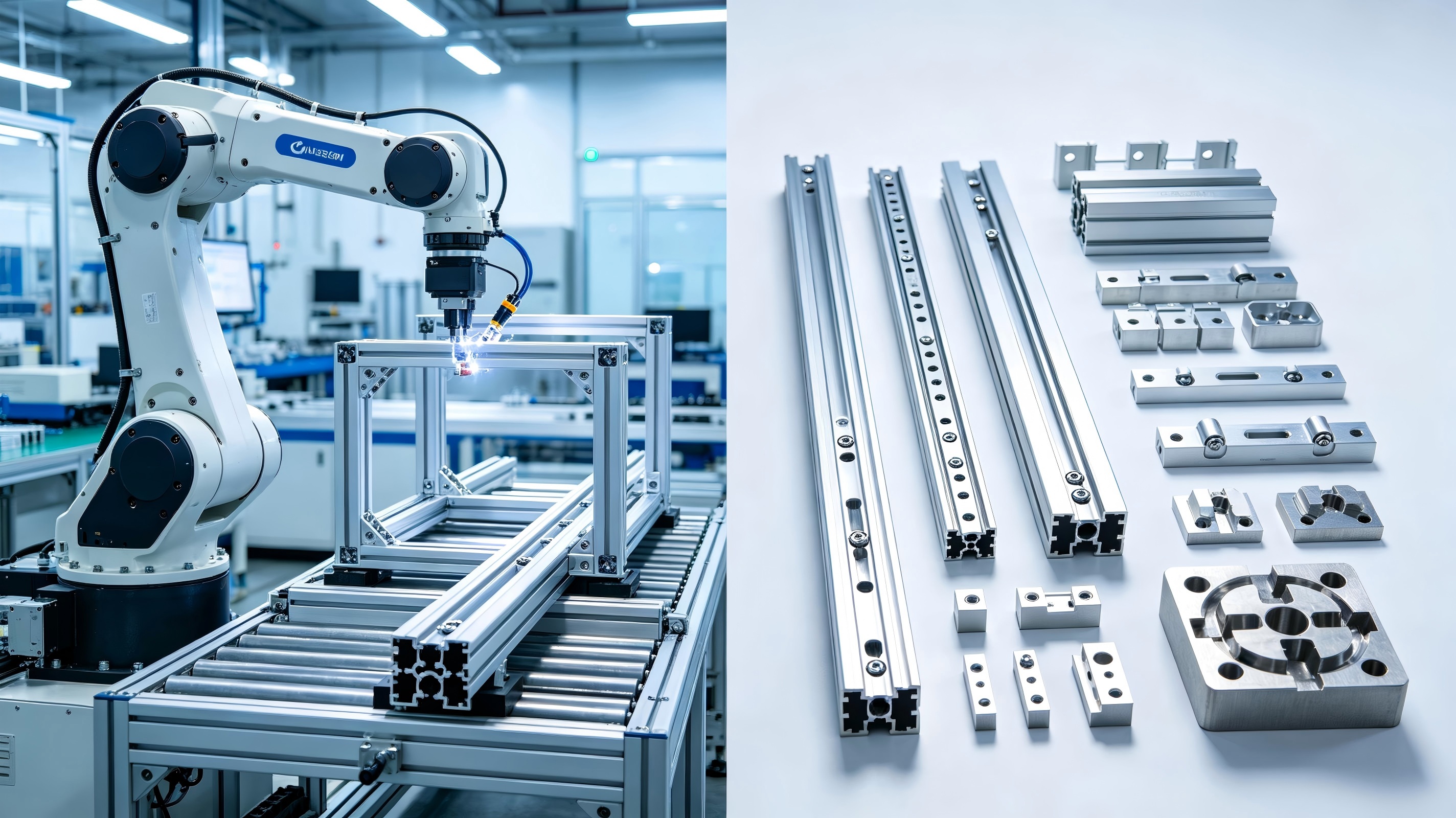
Industrial aluminum profiles have good ductility and machinability, supporting various deep processing technologies such as cutting, drilling, bending, stamping, welding, and CNC precision milling. Our factory can customize aluminum profile accessories of different cross-sectional shapes, sizes, wall thicknesses, and structures according to the drawings and sample requirements of automotive manufacturers and robotics enterprises, including special-shaped frame parts, precision connecting accessories, hollow lightweight structural parts, and integrated molding parts. The one-time molding processing of aluminum profiles effectively reduces welding seams and assembly gaps, improves the overall integrity and sealing of parts, and makes the product structure more compact and beautiful.
In addition, aluminum profiles have flexible assembly performance. The standardized groove structure of industrial aluminum profiles can realize rapid assembly and disassembly without complex welding and polishing processes, which is very suitable for the rapid iteration and upgrade of robotic automated equipment and automotive modular structures. When enterprises upgrade equipment or adjust vehicle structures, aluminum profile components can be quickly modified and reused, greatly shortening the product development cycle and improving the flexibility of production and R&D.
5. Environmental Protection & Recyclability: Comply with Global Sustainable Development Trends
With the global emphasis on environmental protection and sustainable development, energy conservation, emission reduction, and green production have become important assessment indicators for international industrial trade and brand competition. Aluminum profiles are typical green environmental protection industrial materials with 100% recyclable characteristics. Compared with steel smelting and processing, aluminum profile production and processing have lower energy consumption and less pollutant emission, which conforms to the environmental protection policies of Europe, America, Southeast Asia and other major global markets.
All aluminum profile accessories produced by our factory can be recycled and reused after the end of their service life, with almost no waste loss. This circular material characteristic helps automotive and robotics enterprises reduce carbon emissions, meet international carbon footprint assessment standards, and enhance the green brand image of products in the global market. For export-oriented manufacturing enterprises, aluminum profile material solutions can effectively help products pass international environmental certification and reduce trade barriers in global market sales.
6. Cost-Effective Industrial Solution for Long-Term Industrial Layout
Many B2B buyers worry that the unit price of aluminum profiles is higher than that of ordinary steel, but from the perspective of the whole life cycle of product use, aluminum profile accessories have higher comprehensive cost performance. Although the raw material cost of aluminum profiles is slightly higher, their lightweight advantage reduces transportation costs, energy consumption costs in equipment operation, and load loss of matching parts; their high precision and high stability reduce product defective rate and equipment failure maintenance costs; their corrosion resistance and long service life reduce parts replacement and after-sales service costs.
Especially in mass production of automotive parts and robotic standardized accessories, the mature processing technology and stable quality of aluminum profiles can help enterprises achieve large-scale standardized production, further dilute production costs and improve product qualification rate. As a professional aluminum profile processing manufacturer, we support OEM/ODM customized processing, mass production supply, and strict quality inspection control, which can provide global B-end customers with stable, high-quality and low-cost aluminum profile accessory solutions.
Conclusion
From lightweight energy saving, high-strength stability, corrosion resistance and durability, to flexible customization, green environmental protection and long-term cost reduction, aluminum profiles have comprehensive and irreplaceable advantages in the manufacturing of modern automotive parts and robotic accessories. With the continuous upgrading of new energy vehicles and industrial intelligent manufacturing, aluminum profile materials will become more widely used in the global high-end industrial field.
As a professional aluminum profile processing manufacturer focusing on automotive and robotic accessory customization, we have advanced CNC processing equipment, mature surface treatment technology and strict quality control system. We can provide global B2B customers with one-stop services including profile extrusion, precision processing, surface treatment, customized molding and mass supply. We support personalized customization according to customer drawings, samples and industry application scenarios, and provide stable and reliable high-quality aluminum profile parts solutions for global automotive manufacturers and industrial robotics enterprises.

Suzhou YuSanhe Material Technology Co., Ltd.
Domestic Sales Section
Address: No.6, Mei Hui Road, Donglai Village, Yangshe Town, Zhangjiagang City, Suzhou, Jiangsu Province, China
Contact Person: Zhen Liu
Mobile/Phone/Wechat: +86 166-0512-2626
Email: samlinge0512@gmail.com samlinge@163.com